
Let's Talk About the Elephant in the Room: How Demographic Shifts and AI Will Change the World for Gen Z and Gen Alpha (And What We Can Do About It)
- Christopher M. Michaud

- Dec 18, 2025
- 6 min read
Look, we need to have an honest conversation about what's coming down the pipeline for our youngest Canadians. While we're busy arguing about the usual political stuff, there's a massive shift happening right under our noses that's going to reshape everything: and I mean everything: for Gen Z and Gen Alpha kids.
Here's the thing: Generation Alpha (kids born after 2013) now makes up nearly a quarter of the world's population. That's bigger than any other generation right now. Meanwhile, Gen Z is hitting the workforce in full swing, and by 2034, these two generations plus millennials will make up 80% of workers in countries like ours. That's not some distant future scenario: that's barely a decade away.
But here's where it gets really interesting (and a bit wild): these kids aren't just growing up with smartphones like Gen Z did. They're growing up with AI as their study buddy, their entertainment system, and soon enough, their coworker.
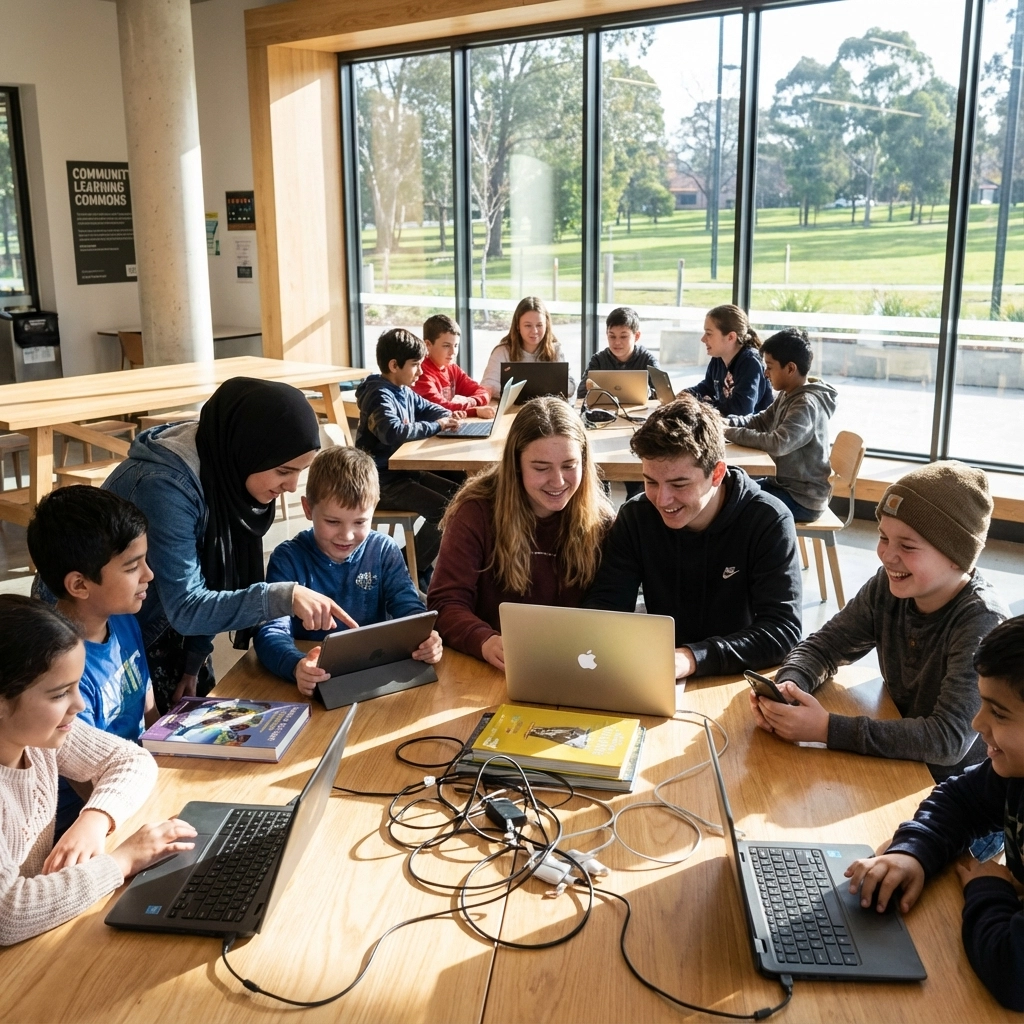
The Numbers Game: Canada's Changing Face
Let's start with what we're actually dealing with in Canada. Our workforce is about to look completely different, and not just because of age. Gen Alpha is shaping up to be the most racially diverse generation in our history. For schools and employers, this isn't some nice-to-have diversity goal anymore: it's just reality.
Here's something that might surprise you: 43% of Gen Alpha kids own a tablet before they turn six, and 58% have smartphones by age 10. Compare that to Gen Z, who mostly got their first real tech around middle school. We're talking about kids who are literally learning to swipe before they can tie their shoes.
And while older folks worry about "kids these days" being glued to screens, here's the flip side: these kids are developing problem-solving skills and digital fluency that would blow your mind. They don't see technology as this separate thing you "learn to use": it's just part of how the world works.
AI Isn't Coming: It's Already Here
Here's where things get real: 74% of Gen Z workers already think AI is going to change how they do their jobs within the next year. Not in five years, not someday: within 12 months. And for Gen Alpha? They're not even thinking about "adapting" to AI because they're growing up with it as normal as running water.
Think about it this way: Gen Z had to learn how to use smartphones and social media. Gen Alpha is learning alongside AI tutors, playing with AI-powered games, and having conversations with AI assistants like it's no big deal. By the time they hit the job market, working with AI won't be a skill they need to develop: it'll be as natural as using email is for us.

But let's not sugarcoat this. There are real challenges coming. Some jobs that exist today won't exist tomorrow. Some skills that matter now might become irrelevant. And some industries are going to get turned completely upside down.
The good news? These generations aren't sitting around waiting for change to happen to them. Gen Z has already shown us they're not afraid to shake things up: from climate activism to completely reimagining what work-life balance looks like. Gen Alpha is likely to be even more adaptable and innovative.
Work Is Going to Look Completely Different
Forget the traditional career ladder. These kids are going to create careers that don't even exist yet. We're talking about jobs focused on climate solutions, aging population care, human-AI collaboration, and problems we haven't even identified yet.
Gen Z has already started this shift. They're not just looking for a paycheck: they want their work to mean something. They're choosing employers based on values, not just benefits. And they're not afraid to job-hop if a company doesn't live up to its promises.
Gen Alpha is going to take this even further. They're growing up expecting sustainability and social responsibility as the baseline, not some nice extra. Companies that haven't figured this out yet are going to find themselves scrambling to attract young talent.

Here's what's particularly interesting about the Canadian context: we're facing the same workforce contraction that's happening across developed countries. Basically, there are going to be fewer workers available just as these tech-savvy generations are coming of age. That actually puts young Canadians in a pretty strong negotiating position, if they play their cards right.
Education Needs a Complete Overhaul (And Fast)
Our education system was designed for a world that's disappearing. Kids who are comfortable collaborating with AI, solving problems across multiple screens, and accessing unlimited information are sitting in classrooms designed for the industrial age.
Gen Alpha students aren't going to accept "because I said so" as an explanation when they can fact-check their teacher in real-time. They're not going to memorize information they can instantly access. And they're definitely not going to sit still for lectures when they're used to interactive, personalized learning experiences.
Smart educators are already adapting. They're using AI as a teaching assistant, focusing on critical thinking over rote memorization, and designing projects that prepare kids for collaborative problem-solving. But we need this transformation to happen faster and more broadly.
So What Can We Actually Do About All This?
Here's the practical stuff: because talking about problems without solutions isn't very helpful.
For Parents and Families
Embrace the tech, don't fear it. Your kids are going to use AI whether you like it or not. The question is whether they'll learn to use it thoughtfully and ethically, or just stumble through it. Get curious about what they're doing online. Ask them to show you their favorite apps or AI tools. Learn alongside them.
Focus on skills that complement technology. Creativity, empathy, critical thinking, and collaboration are going to be more valuable than ever. These are things AI can assist with but can't replace.
Teach digital citizenship early. Help kids understand that everything online has consequences, that not all information is reliable, and that technology is a tool, not a substitute for human connection.
For Employers and Business Leaders
Start preparing now. Don't wait until Gen Alpha hits your workplace to figure out how to work with AI-native employees. Invest in AI literacy for your current team, experiment with AI tools, and create flexibility for different working styles.
Rethink your recruitment and retention strategies. Values alignment isn't optional anymore: it's a competitive necessity. If your company's mission doesn't authentically reflect sustainability and social responsibility, these generations will notice, and they'll go elsewhere.
Create mentorship programs that work both ways. Pair experienced workers with young employees so knowledge flows in both directions. Your Gen Z and Gen Alpha workers might teach your senior staff about AI tools, while learning industry knowledge and professional skills.

For Educators and Policymakers
Redesign curricula around collaboration with AI. Instead of banning AI tools, teach students how to use them effectively and ethically. Focus on developing judgment, creativity, and complex problem-solving skills.
Invest in teacher training. Educators need support to adapt to these changes. They shouldn't have to figure out AI integration on their own time with their own resources.
Address the workforce transition proactively. We need policies that help workers adapt as jobs change, not just unemployment benefits after jobs disappear. This means robust retraining programs, portable benefits, and support for entrepreneurship.
The Bottom Line: This Is Our Opportunity
Look, change is happening whether we're ready or not. We can either spend our time worrying about what we're losing, or we can get excited about what we're gaining.
These generations are growing up with tools and perspectives that could help us solve problems that have stumped previous generations. Climate change, inequality, healthcare challenges, economic uncertainty: Gen Z and Gen Alpha are approaching these issues with fresh eyes and powerful technology.
The key is making sure they have the support, education, and opportunities they need to use their potential effectively. That's going to require all of us: parents, employers, educators, and policymakers: working together instead of just hoping someone else handles it.

This isn't about picking sides or playing politics. It's about recognizing that we're at a turning point and making smart choices about how we navigate it. We can help these generations thrive, or we can leave them to figure it out on their own.
I know which option serves Canada better. The question is: are we ready to do the work?
The elephant in the room isn't that change is coming: it's that we're still acting like we have time to wait and see how things play out. We don't. But if we start taking action now, we can help shape a future that works for everyone. And honestly? That's a pretty exciting challenge to take on together.
For a deeper look at how the next Canadian generations will shape our economy, politics, and everyday life, check out 'After the Boom' by Christopher Michaud. He explains in depth how demographic forces and AI will transform the future—and how families, leaders, and communities can get ready to thrive. Explore the big questions and get practical, real-world analysis at: https://www.uccparty.ca/product-page/after-the-boom

Comments