
Canada's Unity Crisis Is Bigger Than Housing, and It Can No Longer Be Ignored
- Christopher M. Michaud

- Dec 30, 2025
- 6 min read
Canada is facing a national unity crisis that runs deeper than any housing shortage, inflation spike, or cost-of-living challenge we've encountered in decades. While our political discourse remains fixated on affordability and economic pressures, the country itself is quietly fracturing along regional lines. This isn't hyperbole or political theater: it's a documented reality that threatens everything we've built as a nation.
The uncomfortable truth is that separatist sentiment has moved from the political margins into mainstream conversation across multiple provinces. What we're witnessing isn't just another cycle of regional frustration that will fade with the next federal election. It's a fundamental breakdown in the social contract that has held Canada together for over 150 years.
The Western Breakaway Is No Longer Theoretical
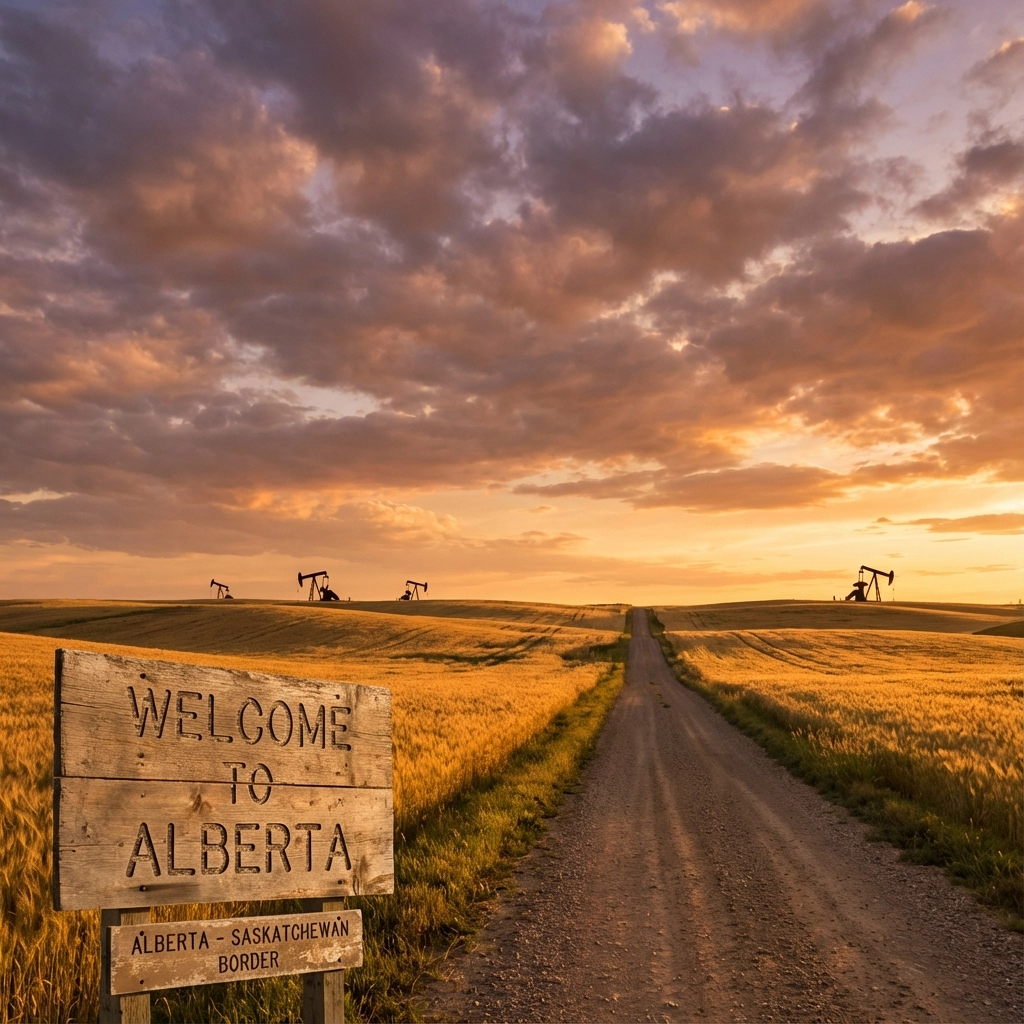
Alberta's independence movement has evolved far beyond protest rhetoric. Recent Angus Reid polling (April–May 2025) shows that 36% of Albertans support leaving Canada, while 19% say they would 'definitely' vote for separation if a referendum were held. In Saskatchewan, 34% express support for leaving, with 15% 'definitely' in favour. While calls for a referendum are common, actual support for concrete separation remains lower, but these numbers represent a significant increase in separatist sentiment compared to the past. These aren't fringe voices or momentary expressions of frustration: they represent organized political movements with clear objectives and growing infrastructure.
Premier Danielle Smith has issued nine specific demands to the federal government, warning that failure to address at least six within six months could trigger what she calls "an unprecedented national unity crisis." This isn't negotiating posture; it's a roadmap toward potential separation.
The grievances driving this sentiment are deeply rooted in economics and respect. In 2015, 45% of Albertans felt respected by the rest of Canada. By 2025, that figure had collapsed to just 24%. Years of federal energy policies perceived as hostile to the oil and gas sector, combined with what many Westerners see as systematic economic exploitation, have created fertile ground for independence movements.
Saskatchewan shares virtually identical economic structures and political frustrations with Alberta. The same polling shows 20% of Saskatchewan residents would support independence in a referendum. If Alberta moves toward separation, Saskatchewan would face enormous pressure to follow, both from its own population and from basic economic necessity.
Quebec's Sovereignty Movement Is Organizing for Victory
The resurgence of the Parti Québécois represents the other half of Canada's unity crisis. Unlike previous sovereignty movements that operated on vague timelines and aspirational language, today's PQ is explicitly committed to holding a referendum within the first hundred days of forming government. Current polling trends suggest this is not only possible but increasingly probable.
What makes this particularly dangerous is timing. If western provinces begin serious separation processes, Quebec's sovereignty movement gains immediate legitimacy and urgency. The idea that provinces can actually leave Confederation transforms from theoretical to practical overnight, fundamentally changing the political calculus across the country.
Quebec sovereigntists understand this dynamic. They're not waiting for ideal conditions or perfect polling numbers. They're preparing for a moment when national fragmentation creates political opportunity, and that moment may be much closer than most Canadians realize.
The Cascading Effect Would Be Irreversible
Here's what many Canadians haven't fully grasped: provincial separation wouldn't happen in isolation. If Alberta successfully exits Confederation, it triggers a cascade of decisions across the country that would likely prove unstoppable.
British Columbia, despite its internal political diversity, would face an immediate economic and geographical crisis. Cut off from the rest of Canada by an independent Alberta, BC would be forced to choose between economic isolation and joining a western bloc. Historical political differences wouldn't matter when faced with trade disruption and infrastructure challenges.
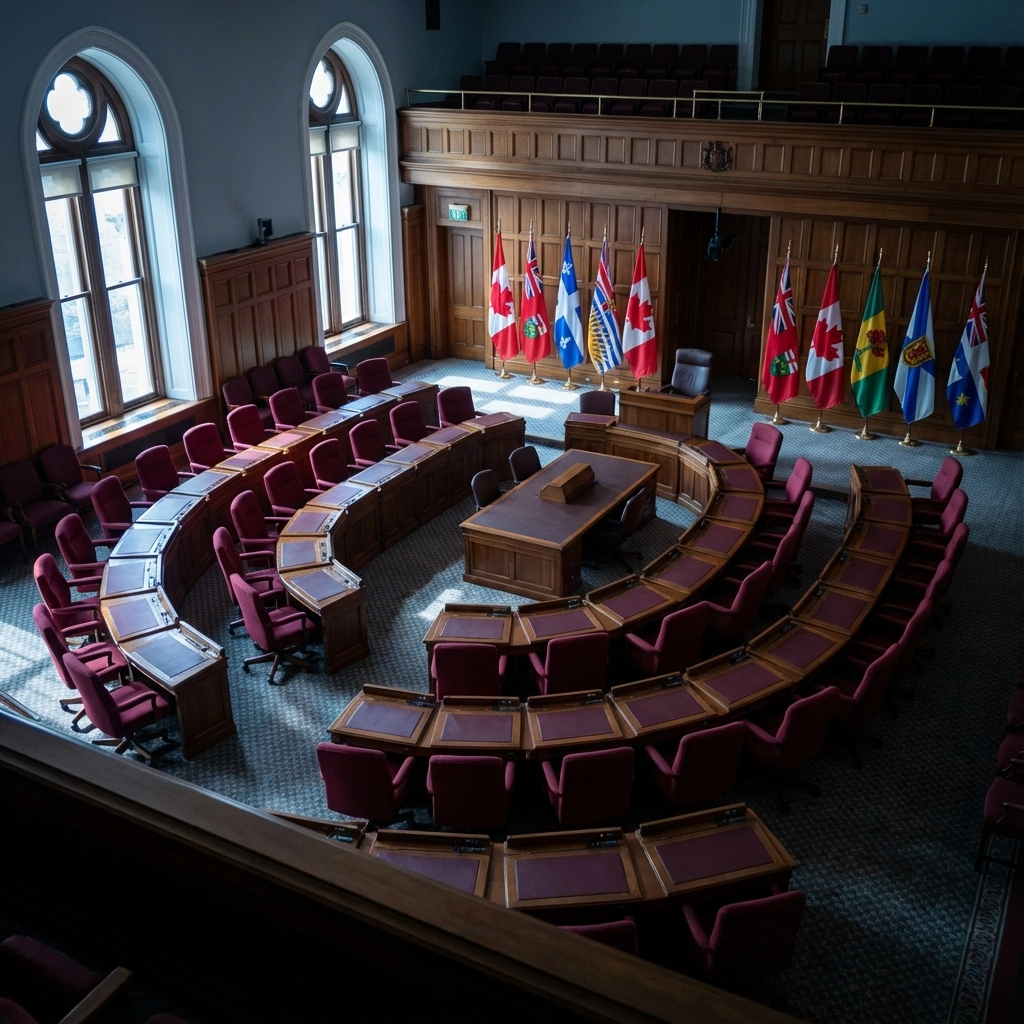
Meanwhile, Quebec would face enormous pressure to act quickly before the window of opportunity closes. Once the precedent of provincial separation becomes real rather than theoretical, Quebec sovereigntists would have every incentive to move immediately while national institutions are weakened and federal authority is in question.
The end result could be a Canada reduced to Ontario, the Maritime provinces, and the territories: a much smaller, economically weaker entity bound together more by geographical accident than shared national purpose.
Why Unity Must Come Before Everything Else
This is precisely why national unity represents a more urgent crisis than housing affordability or cost-of-living pressures. Those issues, serious as they are, exist within the framework of a functioning country. There is no meaningful solution to housing, healthcare, or economic stability if the country itself is disintegrating.
Markets respond poorly to uncertainty, and separation movements represent the ultimate uncertainty. Businesses delay major investments when they're unsure which country they'll be operating in five years from now. Workers postpone life decisions like home purchases when they don't know which currency they'll be earning. Capital flows slow when trade agreements and infrastructure projects become politically fragile.
Every major policy challenge Canada faces: from climate action to healthcare funding to economic development: depends on national coherence for effective implementation. A country actively questioning its own survival cannot provide the stability required for long-term prosperity.
We've reached this crisis point through decades of strategic avoidance. Government after government has acknowledged regional alienation, then postponed dealing with it. Constitutional questions have been labeled too dangerous to touch. National identity has been treated as settled even as evidence mounted that it was not.
Indigenous Peoples, Treaties, and True National Unity
Any conversation about breaking up Canada doesn’t just affect provinces—it directly impacts First Nations, Métis, and Inuit communities. Their voices and rights must be part of any real solution on national unity. True cohesion demands Indigenous inclusion and respect.
The United Canadian Centrists Offer a Path Forward
This is exactly the space the United Canadian Centrists were created to occupy. We're not a protest movement reacting to specific grievances, nor are we an ideological experiment trying to import foreign political models. We exist because Canada needs a serious, credible effort to repair national cohesion before it becomes impossible.
Our approach through Canadianism is built on five foundational pillars that place unity at the center of public policy. This isn't about nostalgic nation-building or centralized control from Ottawa. It's about restoring balance between regions and federal authority, respecting provincial realities without undermining national institutions, and rebuilding trust in government systems that are supposed to serve all Canadians.
Rather than inflaming regional grievances or dismissing them as illegitimate, we focus on structural solutions that address root causes. Rather than reducing politics to left-versus-right theatrical performances, we concentrate on outcomes that strengthen the country as a whole.
Most importantly, we treat national unity as a policy priority requiring active management, not an assumption that can be safely ignored while we debate other issues.
Canada Needs Credible Center Leadership
What Canada lacks right now isn't louder regional advocacy or more partisan polarization. We need credible leadership from the center that can listen to legitimate grievances, mediate between competing interests, and build consensus around shared national objectives.
The coming years will define what kind of country Canada becomes: or whether it remains a country at all. If separatist movements succeed in breaking up Confederation, whatever emerges will be weaker, poorer, and less capable of addressing the very challenges that drove people apart in the first place.
But if national unity is deliberately restored through principled leadership and structural reform, Canada still has the opportunity to reset, stabilize, and move forward together as a stronger federation.
Time Is Running Short
The arithmetic is straightforward: housing can be built, inflation can be managed, and economies can recover from temporary disruptions. Nations that lose their shared sense of purpose and national cohesion rarely get second chances.
Canada still has time to address this crisis, but not much. Every month that passes with regional grievances unaddressed, national institutions weakened, and separatist movements growing stronger makes the eventual solution more difficult and less likely to succeed.
The choice facing Canadians isn't between different approaches to housing policy or inflation management. It's between maintaining a unified country capable of addressing complex challenges together, or accepting national fragmentation that will make every other problem harder to solve.
Unity must come first, because without it, nothing else follows. The United Canadian Centrists understand this reality and are prepared to lead the effort to keep Canada together. The question is whether enough Canadians will recognize the urgency before it's too late.

Comments